
How it works
From nervous to natural
Great training builds knowledge. The gap is confidence — being ready to act when the real moment arrives. Evolve closes that gap with private, repeatable practice that supplements your existing delivery.
The challenge
Why people don't practise
- Fear of saying the wrong thing in front of colleagues.
- Sensitive subjects feel personally exposing.
- Group roleplay means performing for an audience — many opt out.
- Live actors need scheduling, cost money, and deliver the experience just once.
- There is no private, low-stakes place to try, fail, and learn.
The cost
What happens without it
- People retain as little as 5–10% of passively consumed training (Dale's Cone of Experience).
- People leave training with solid knowledge but hesitant action.
- The first real application happens in a genuine high-stakes moment.
- Confidence stays low despite genuine intention and quality training.
- The investment in training underperforms its potential.
The learner experience
Four steps, built around your training
A clear, repeatable journey designed to sit alongside facilitated delivery and debrief.
Real, not scripted
A conversation, not a flowchart
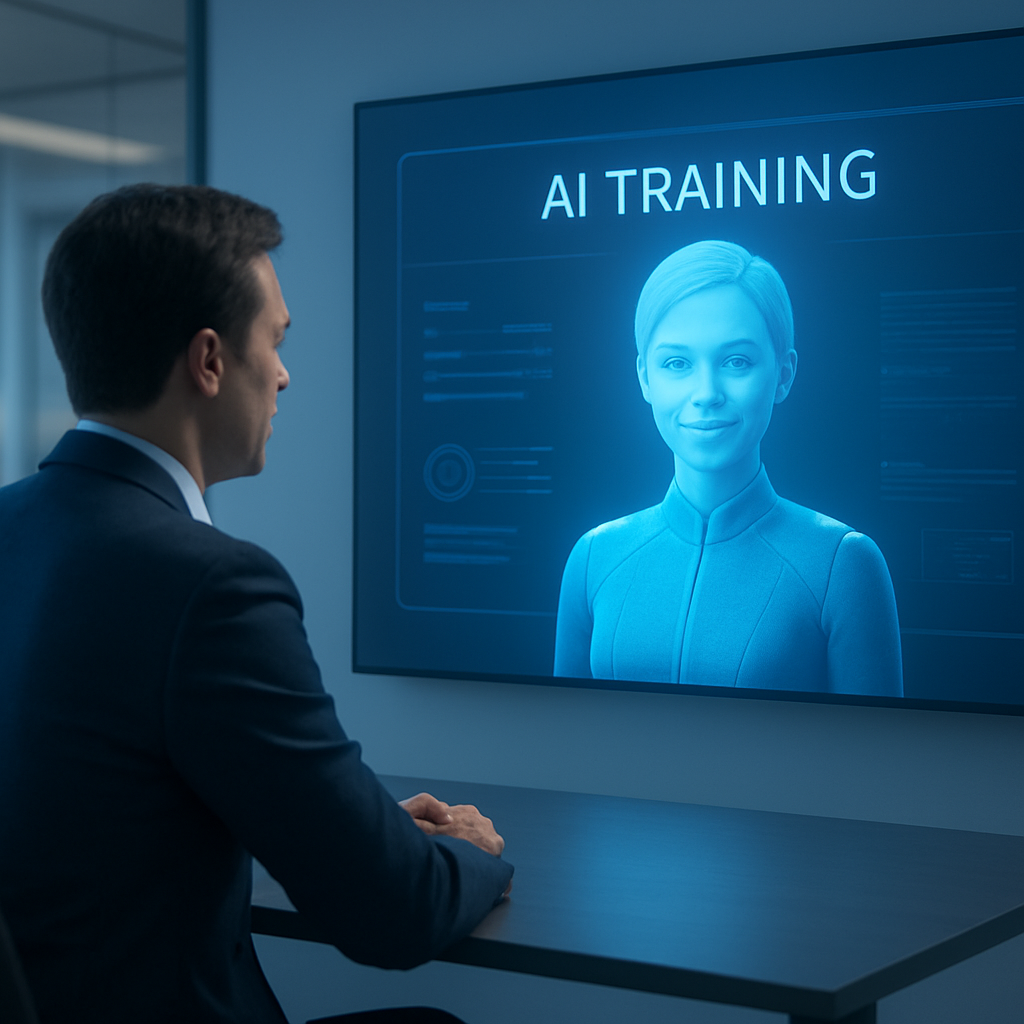
The learner speaks in their own words. The character responds in real time with authentic emotion and genuine conversational turns. Push too hard and they may pull back; show empathy and give time, and the conversation opens up.
That is the learning value: the learner isn't watching someone model the skill — they're feeling what it's like to do it themselves, making small adjustments, and bringing something concrete into debrief.
The research
Why doing beats watching
Decades of learning science — and a wave of recent enterprise studies — point to the same conclusion: active, spoken practice is what turns knowledge into confident action.
75%
knowledge retention from simulation, vs 5–10% for passive e-learning
Dale's Cone of Experience
4×
faster to learn soft skills than classroom training
PwC
275%
more confident to act on what they learned
PwC
131%
verified return on investment on a simulation program
H&R Block / Mursion
Why it works
Practice that builds confident habits
Give every employee a safe place to practise
See Evolve in action with a scenario built for your team. No production crew, no scheduling — and it reinforces the facilitator-led training you already run rather than replacing it.